High Fiber Breakfast Foods: The Honest Guide
By:Author:Peptide Diet Editorial
Updated on:October 18, 2026
- The Myth That One Fibre-Packed Bowl Fixes Everything
- How Fibre at Breakfast Actually Keeps You Full
- What Actually Decides How Full Your Breakfast Keeps You
- A Week of High Fiber Breakfasts Worth Copying
- Fitting Fibre-Rich Mornings Into an Actual Schedule
- When a Fibre-Rich Breakfast Habit Starts Feeling Normal
- Mistakes That Quietly Undercut a Fibre-Rich Breakfast
- Building Fibre-Rich Breakfast Habits With Peptide Diet
- Starting Tomorrow's Breakfast on the Right Foot
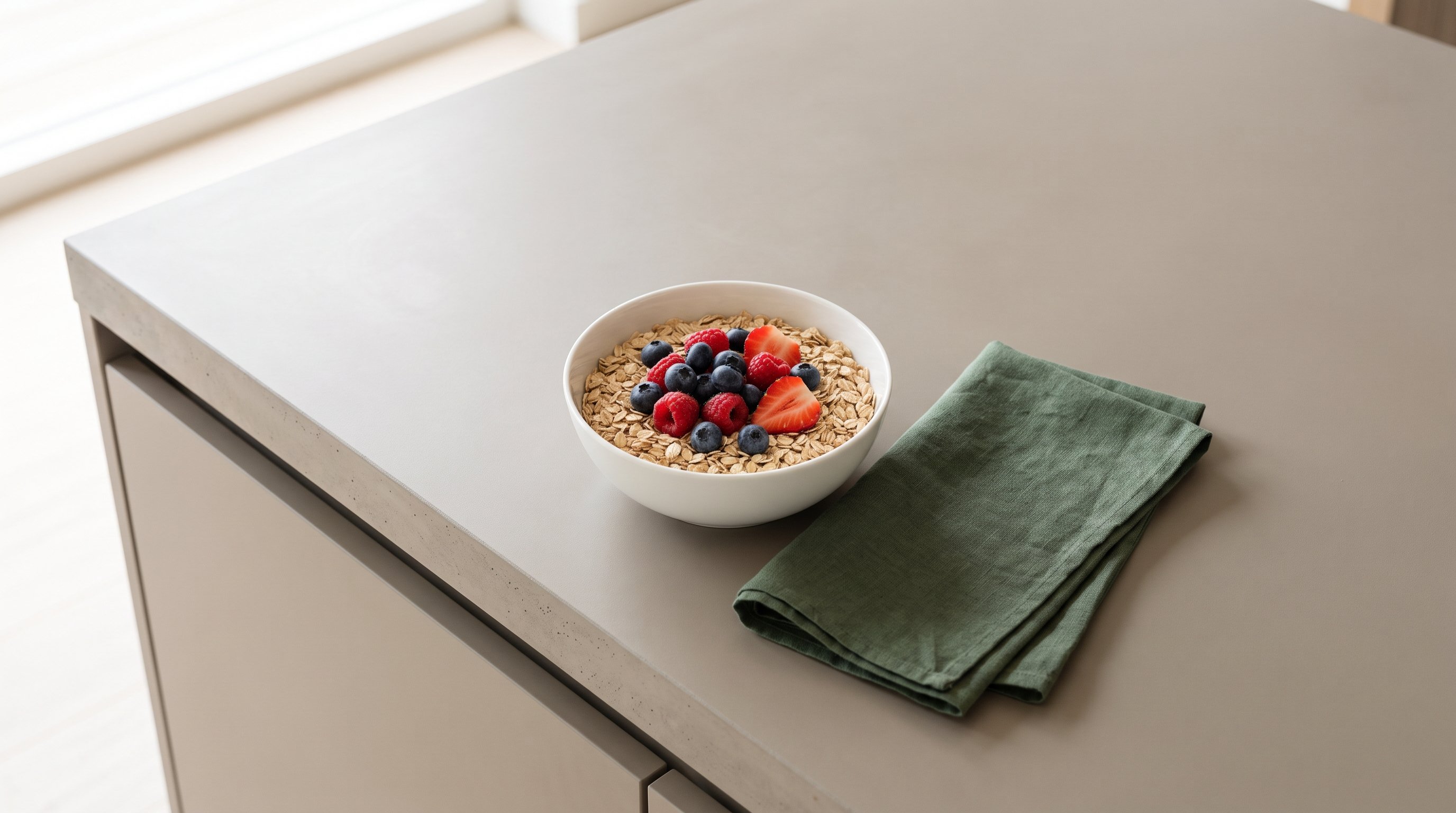
High fibre breakfast foods are things like oats, whole fruit with the skin on, beans, chia or flax seeds and wholegrain bread - foods that still have most of their plant structure intact.
Fibre is the part of plant food your body can't fully break down, so it moves through your gut slowly, bulking things up and slowing how fast everything else gets digested.
This guide covers what fibre actually does at breakfast, what a good plate looks like, where people go wrong, and how to build a habit that doesn't fall apart by Thursday.
The Myth That One Fibre-Packed Bowl Fixes Everything
No single breakfast, however fibre-rich, melts fat from one part of the body or undoes the rest of the day on its own.
The body doesn't work that way - it doesn't know which meal to pull energy from, and it definitely doesn't target a stomach or a chin because breakfast was high in fibre.
What a fibre-rich breakfast can honestly do is make you feel fuller for longer, which makes it easier to eat less later without gritting your teeth through it.
The real answer is unglamorous: fibre at breakfast is one lever among several, and it works best stacked with normal portions and a bit of consistency, not as a stand-alone fix.
How Fibre at Breakfast Actually Keeps You Full
Fibre doesn't work through willpower - it works through physics and digestion speed.
Soluble Fibre Slows Things Down
Soluble fibre, found in oats and chia seeds, turns gel-like in the gut and slows how fast food moves through, which stretches out the feeling of fullness after breakfast.
Insoluble Fibre Adds Bulk
Insoluble fibre, found in wholegrain bread and fruit skins, doesn't dissolve - it adds bulk to what you've eaten, which helps you feel satisfied on a smaller plate.
Put the two together and you get a breakfast that sits with you rather than one that leaves you hunting for a snack an hour later.
What Actually Decides How Full Your Breakfast Keeps You
Not every high fibre breakfast performs the same, and three things tend to matter more than the others.
What Changes the Result
- Fibre plus protein together - a fibre-only breakfast like plain toast still digests fast; pairing it with eggs, yoghurt or nut butter slows things down further and keeps you fuller.
- Whole foods over processed versions - whole oats and whole fruit keep their fibre structure intact, while many packaged cereals strip most of it out even when the label says 'wholegrain'.
- Portion size that matches your morning - a large bowl of beans or oats takes longer to digest than a small one, so match the portion to how long you need it to last.
A Week of High Fiber Breakfasts Worth Copying
Here's a simple weekly rotation that mixes fibre sources so nothing gets boring and nothing requires a special shop.
| Day | Breakfast |
|---|---|
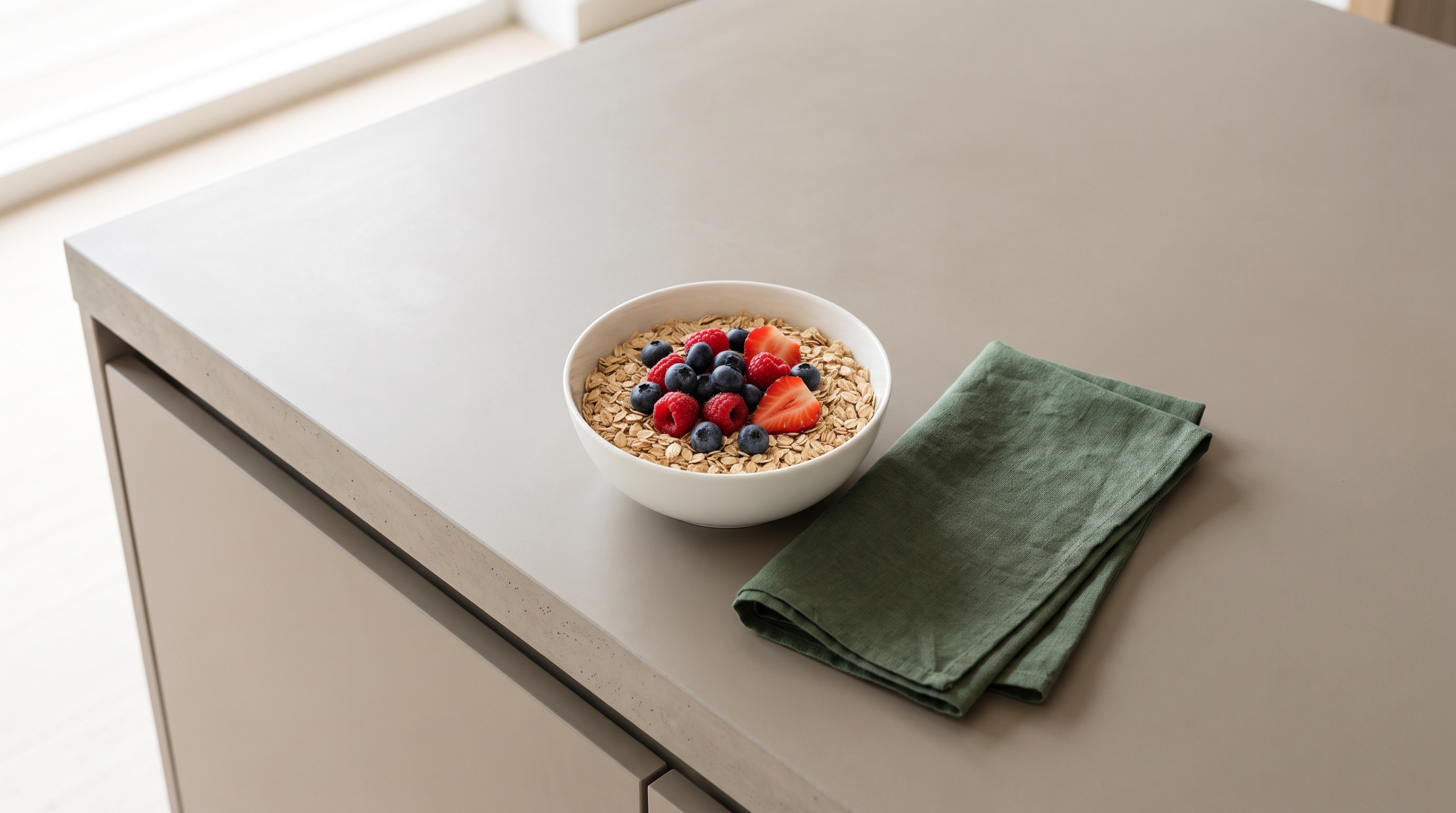
| Monday | Oats with chia and berries |
| Tuesday | Wholegrain toast, mashed avocado |
| Wednesday | Yoghurt, oats, sliced apple |
| Thursday | Beans on wholegrain toast |
| Friday | Smoothie with spinach and oats |
| Saturday | Wholegrain pancakes with berries |
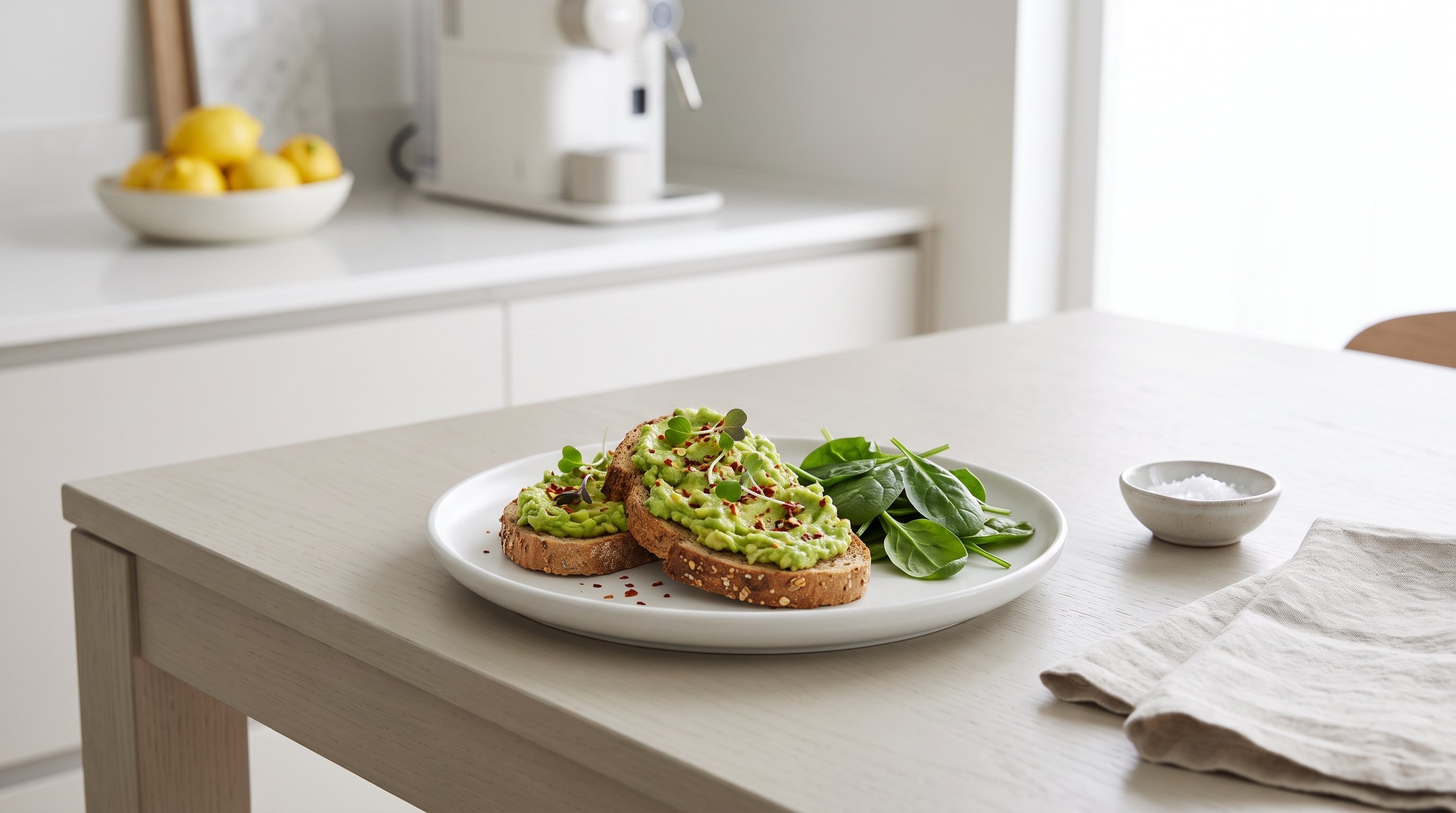
None of these need special equipment or a long shopping list - most of it is pantry staples plus whatever fruit is in the bowl that week.
Fitting Fibre-Rich Mornings Into an Actual Schedule
The honest barrier to eating more fibre at breakfast isn't knowledge - it's time, and mornings rarely cooperate.
Overnight oats made the night before, or a batch of boiled eggs plus pre-washed fruit, remove the decision-making from a rushed morning entirely.
A meal plan built around food you already like makes this easier to repeat, because you're not reinventing breakfast every single day - Peptide Diet's recipe library leans on exactly that kind of repeatable simplicity.
The goal isn't a perfect breakfast every day, it's a short list of fibre-rich options you can grab without thinking.
When a Fibre-Rich Breakfast Habit Starts Feeling Normal
The first few mornings of swapping in oats or beans for cereal can feel like extra effort, and that's normal.
Somewhere in the following weeks, the slower fullness starts to feel expected rather than noticeable, and reaching for the high fibre option stops being a decision at all.
This is where most people either stick with it or quietly drift back to whatever's fastest - the difference usually comes down to how few decisions the new breakfast actually requires.
Give it time rather than watching for a specific date; habits built on convenience tend to outlast habits built on motivation.
Mistakes That Quietly Undercut a Fibre-Rich Breakfast
Skipping Protein Entirely
Fibre without protein still digests faster than you'd think - add eggs, yoghurt or nut butter so the fullness actually lasts the morning.
Trusting the Word 'Wholegrain' on a Box
Some packaged cereals labelled wholegrain have had most of their fibre processed out - check that whole oats, bran or whole fruit are doing the work instead.

Jumping to a Huge Fibre Intake Overnight
A sudden jump from almost no fibre to a very high fibre breakfast can leave your gut playing catch-up - build it up gradually over a couple of weeks.
Forgetting to Drink Enough Water
Fibre needs fluid to do its job properly, so a dry high-fibre bowl without a drink alongside it won't move through as smoothly.
Treating Breakfast As the Whole Plan
One good breakfast doesn't offset the rest of the day - it works best as part of meals that are reasonably balanced across the whole day.
Building Fibre-Rich Breakfast Habits With Peptide Diet
Deciding what to eat every single morning is the part that wears people down, not the eating itself.
Peptide Diet pulls from a library of over 1000 recipes, so high fibre breakfast options show up as part of a plan built around food you already like, rather than another list to remember.
Progress tracking and visualization keep water intake and weight in one place, which matters since fibre only does its job properly alongside enough fluid.
Maximize Your Peptide Results
Eat Right, Lose Weight Faster
Starting Tomorrow's Breakfast on the Right Foot
Pick one high fibre swap for tomorrow - oats instead of cereal, or wholegrain toast instead of white - and build from there rather than overhauling the whole kitchen at once.
Peptide Diet can take the daily decision-making off your plate once the swap feels worth keeping.
FAQ
It can help indirectly, by keeping you fuller for longer so you're less likely to overeat later in the day. It's one part of a wider pattern, not a result on its own.
Skipping breakfast works fine for some people and leaves others ravenous by mid-morning, so it depends on how your own body responds. A fibre-rich breakfast is simply one option that tends to hold hunger off longer than a low-fibre one.
Overnight oats, a jar of pre-made chia pudding or grab-and-go fruit with nut butter solve most of the time problem. The prep happens the night before, so the rushed morning only needs a few seconds.
Keep the fibre-rich option as easy to grab as the old habit, and rotate a few meals so it never gets boring. Peptide Diet's recipe library and progress trackers are built to make that kind of repeatable swap easier to stick with.
Share this post