Beginner Home Workout: The Honest Guide
By:Author:Peptide Diet Editorial
Updated on:October 18, 2026
- A Week of Home Training Worth Copying
- How Often a Beginner Home Workout Should Happen
- Why Training at Home Beats Forcing a Gym Habit
- Making a Home Workout Fit a Normal Week
- Who a Beginner Home Workout Suits and How to Adapt It
- When a Home Workout Habit Starts to Feel Normal
- Backing a Beginner Home Workout With Peptide Diet
- Keeping a Home Workout Going Past the First Month
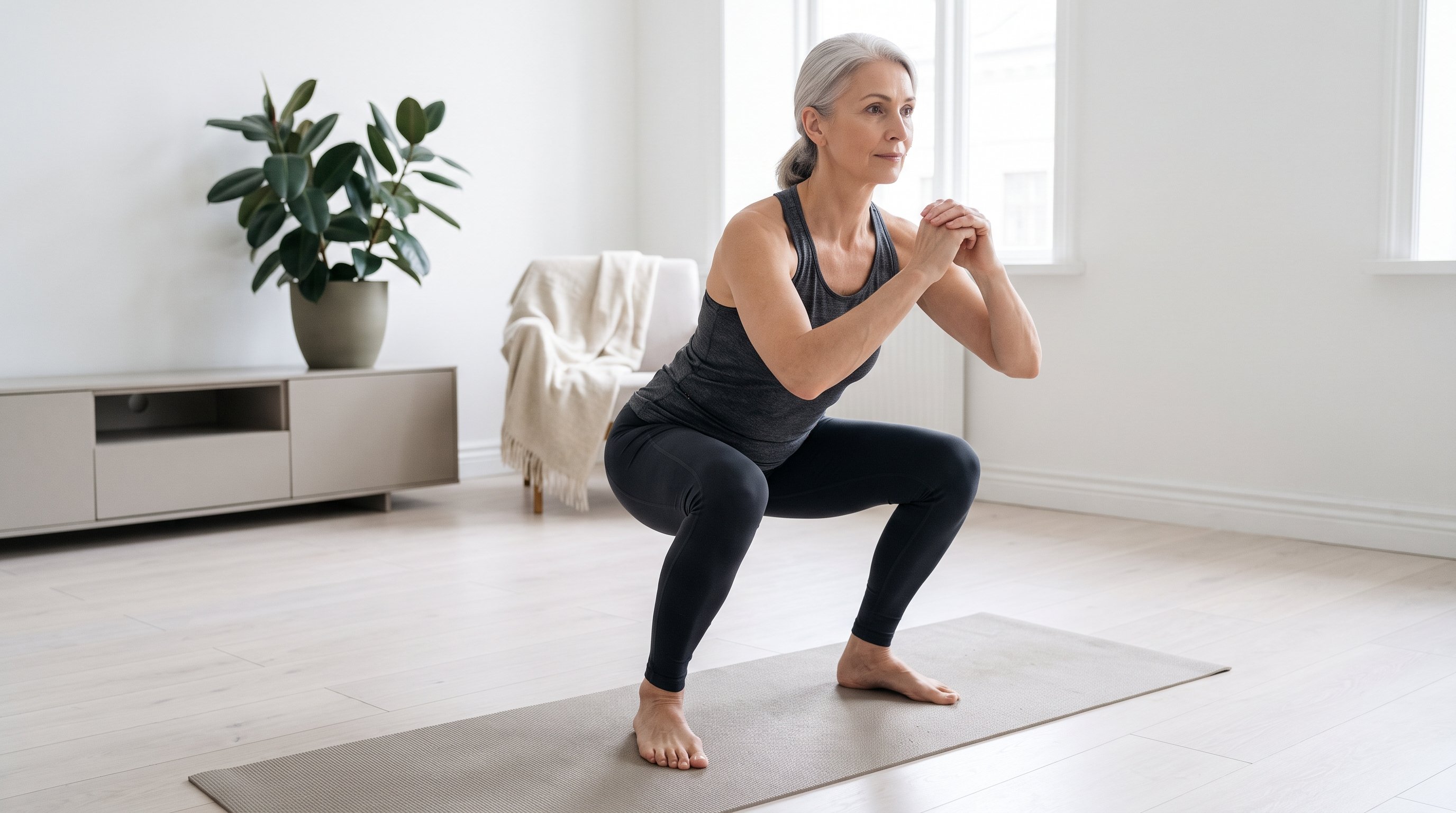
A beginner home workout works when it uses bodyweight moves you can do without equipment, repeated often enough that your body adapts. No gym, no special kit, just a bit of floor space and a consistent slot in your week.
Muscles respond to being asked to do something slightly harder than usual, then given time to recover. That's the whole mechanism - squats, push-ups and planks load the same muscle groups a gym machine would, just using your own body weight as resistance.
This guide covers what a normal week looks like, how often to train, why starting at home beats signing up somewhere you'll dread going, and how to keep it going once the new-habit buzz wears off.
A Week of Home Training Worth Copying
Here's a sample week built around three training days and plenty of rest. Nothing here needs equipment beyond a chair or a wall.
Sample Beginner Week
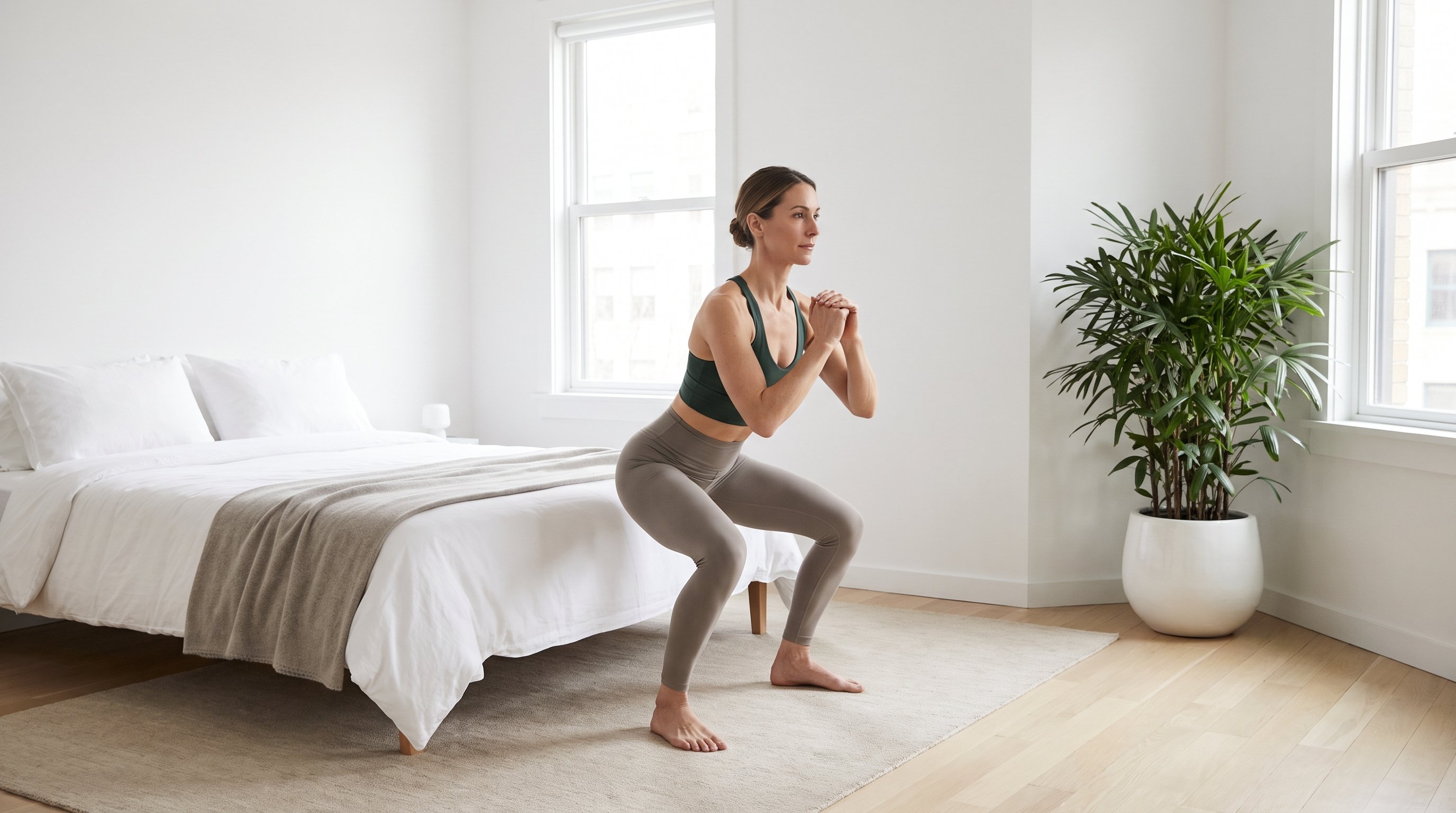
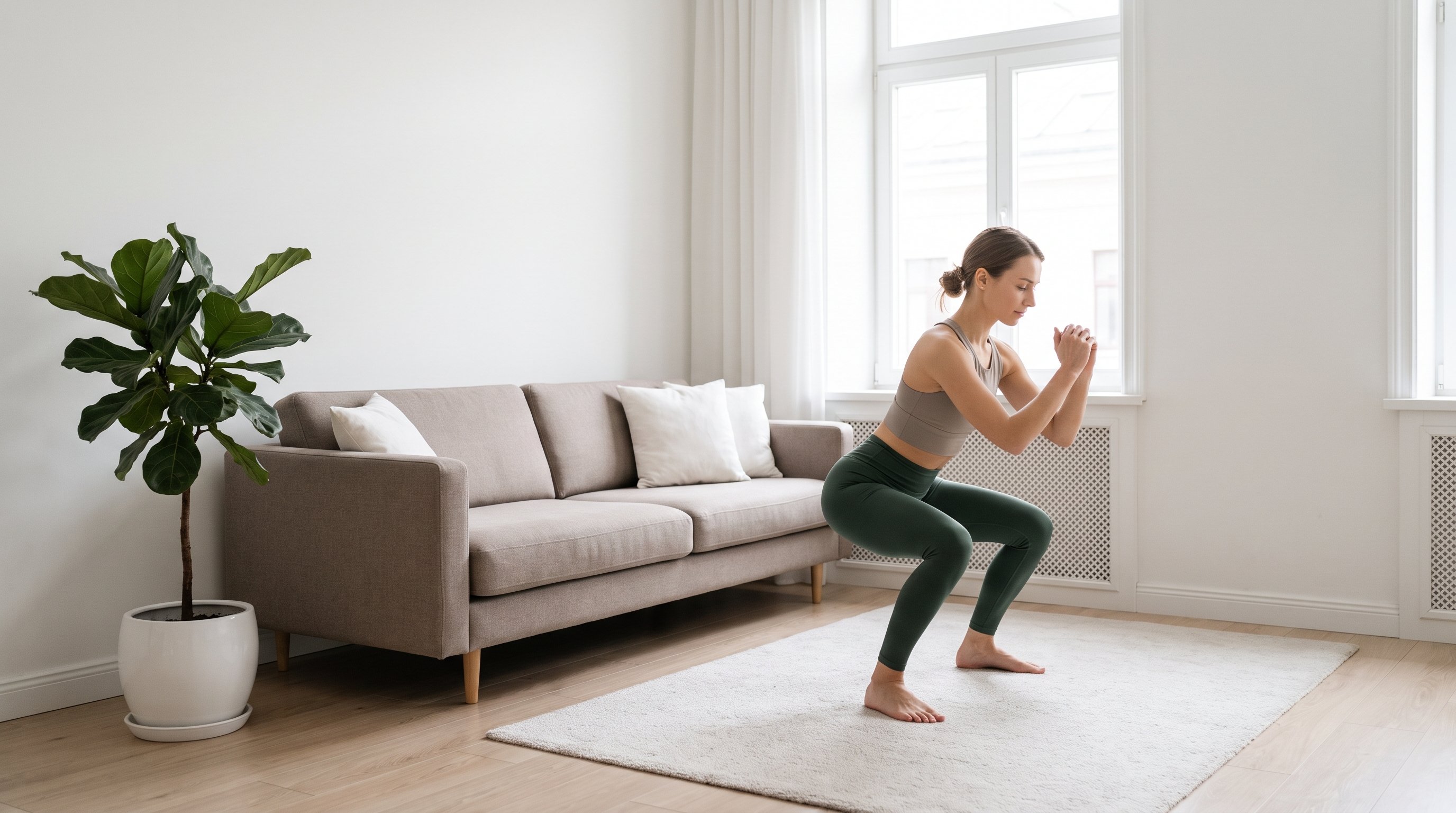
- Monday - full body: squats, push-ups against a wall or floor, glute bridges, plank holds
- Tuesday - rest or a gentle walk
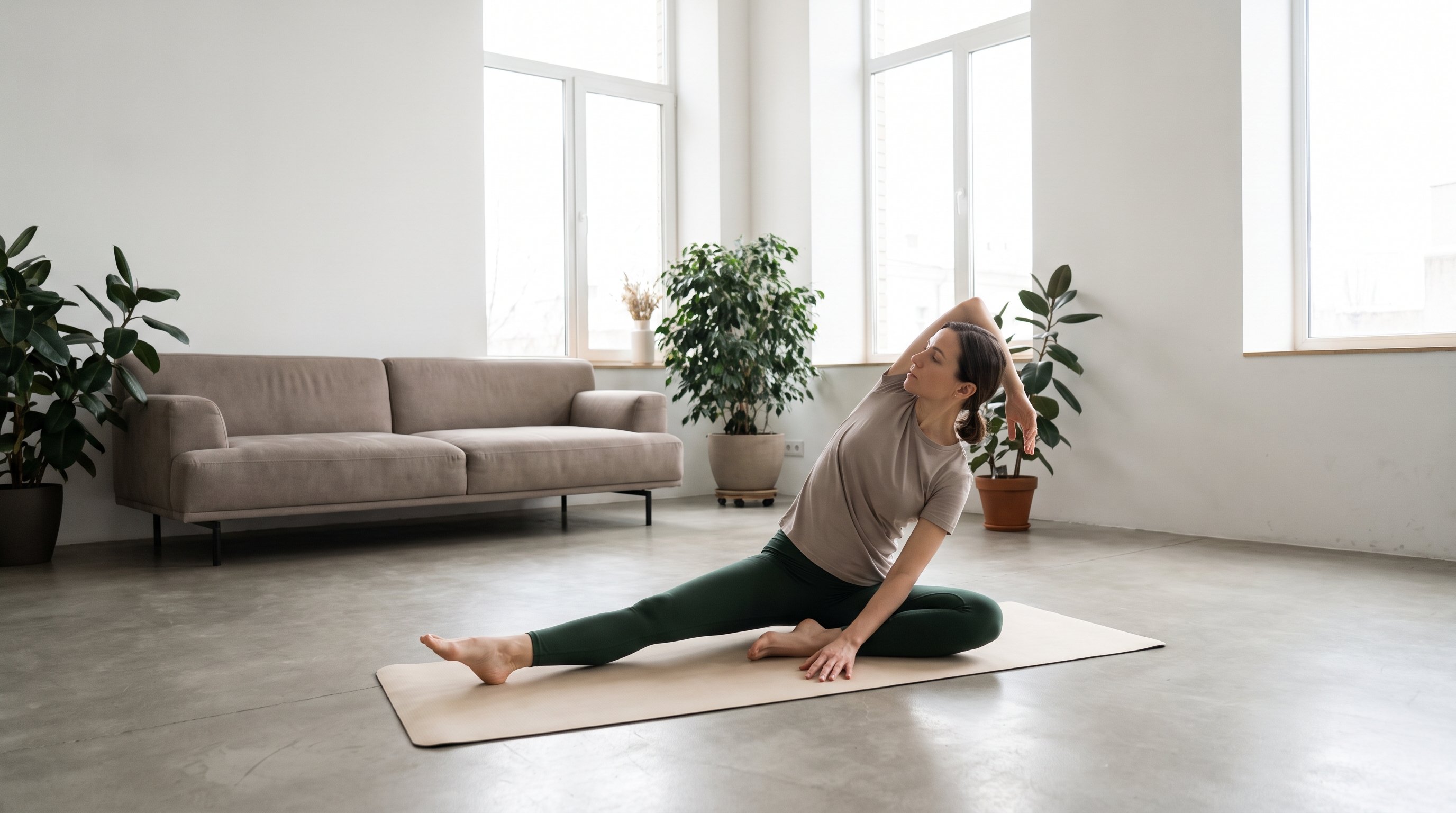
- Wednesday - full body: lunges, incline push-ups, bird-dogs, side planks
- Thursday - rest or stretching
- Friday - full body: step-ups on a stair, push-ups, hip hinges, plank holds
- Weekend - rest, light movement, or repeat one favourite session if you're enjoying it
That's three real workouts and four lighter or rest days, which is plenty to start building the habit without burning out in week one.
How Often a Beginner Home Workout Should Happen
Finding a Starting Number
Three sessions a week is a solid starting point - enough to build momentum, spaced out enough to recover between them.
The table below breaks down a few common starting setups so you can pick what's realistic for your week, not what sounds impressive.
| Setup | Session Length | Best For |
|---|---|---|
| Two sessions a week | 20 to 25 minutes | Very busy weeks, first timers |
| Three sessions a week | 25 to 30 minutes | Most beginners starting out |
| Four sessions a week | 20 to 25 minutes | People who enjoy a routine |
| Five short sessions | 15 minutes | Fitting movement into a packed day |
Why Training at Home Beats Forcing a Gym Habit
The gym isn't the problem - the friction is. Packing a bag, driving there, finding parking, waiting for equipment - every one of those steps is a chance to talk yourself out of it.
A home workout removes nearly all of that friction. You change clothes, you train, you're done - no commute, no membership fee, no self-consciousness about being the newest person in the room.
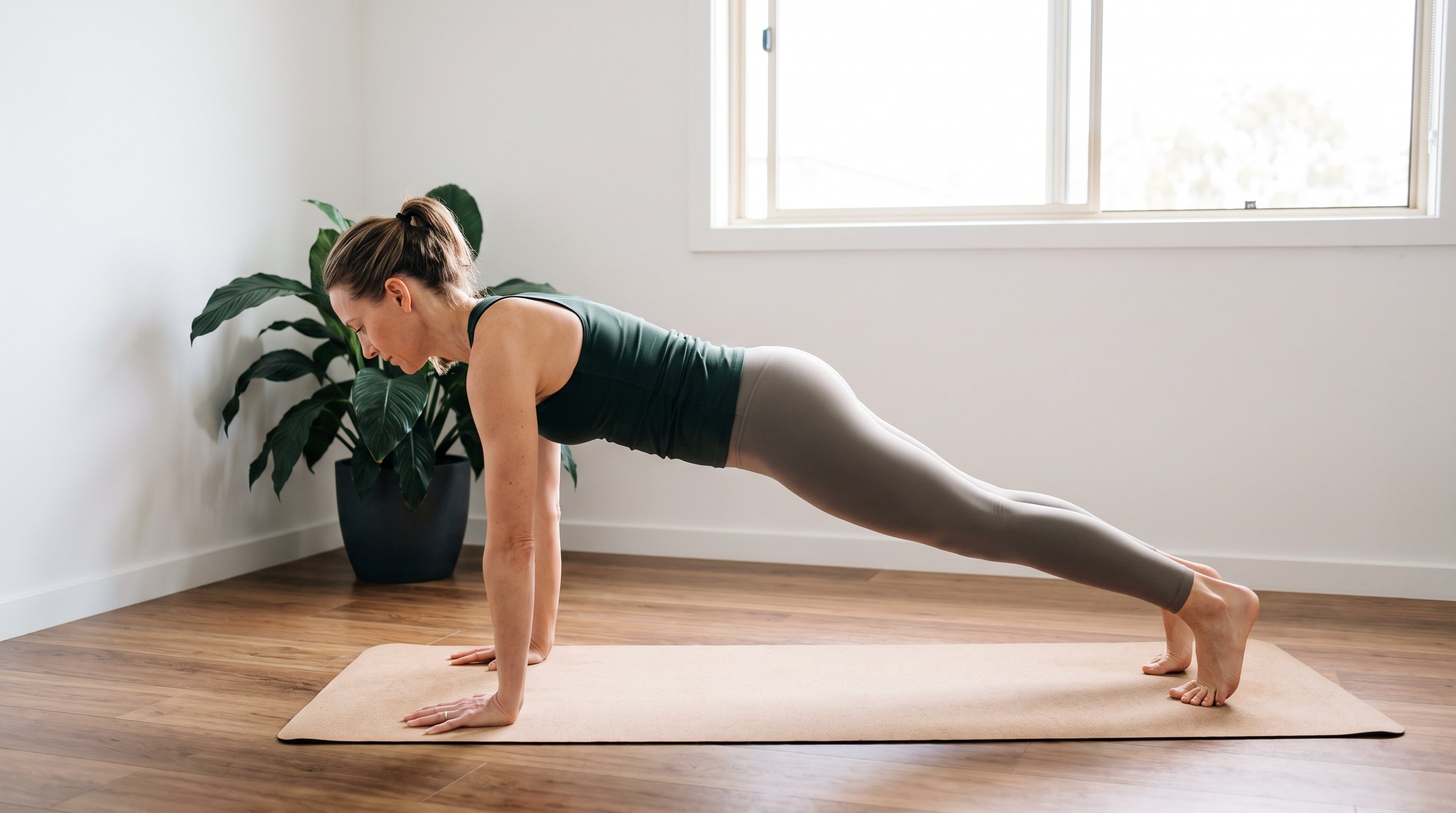
The adherence argument is simple arithmetic: a 20-minute home session you actually do beats a 60-minute gym session you keep postponing. Consistency is what builds results over time, and the easier option is the one more likely to happen again tomorrow.
Making a Home Workout Fit a Normal Week
Most weeks don't leave a clean hour for exercise, so the trick is attaching the workout to something you already do - after the kettle boils, before the shower, during a show you half-watch anyway.
Keeping the session short on purpose also helps it survive a busy week, since a 20-minute plan is far easier to protect than a 60-minute one.
Peptide Diet's low-impact workout library gives you short bodyweight routines you can slot into exactly these gaps, alongside step and water trackers so the rest of your day stays visible too.
Who a Beginner Home Workout Suits and How to Adapt It
If You've Never Trained Before
Start with the easiest version of every move - knee push-ups instead of full ones, shallow squats instead of deep - and let your body get used to moving regularly before adding difficulty.
If Your Week Is Already Full
Two short sessions beat zero long ones, so pick the days you can genuinely protect and treat everything else as a bonus.
If You're Returning After a Long Break
Treat the first couple of weeks as relearning the movements rather than pushing hard, since the goal early on is building the habit back, not testing your limits.
If Joints or Balance Are a Concern
Use a wall or sturdy chair for support during squats and lunges, and swap floor-based moves for seated or standing versions where needed.
When a Home Workout Habit Starts to Feel Normal
The first couple of weeks are usually the hardest - the moves feel unfamiliar and motivation is doing most of the work rather than habit.
Expect that stage to pass gradually rather than suddenly, as the routine becomes something you do without negotiating with yourself first.
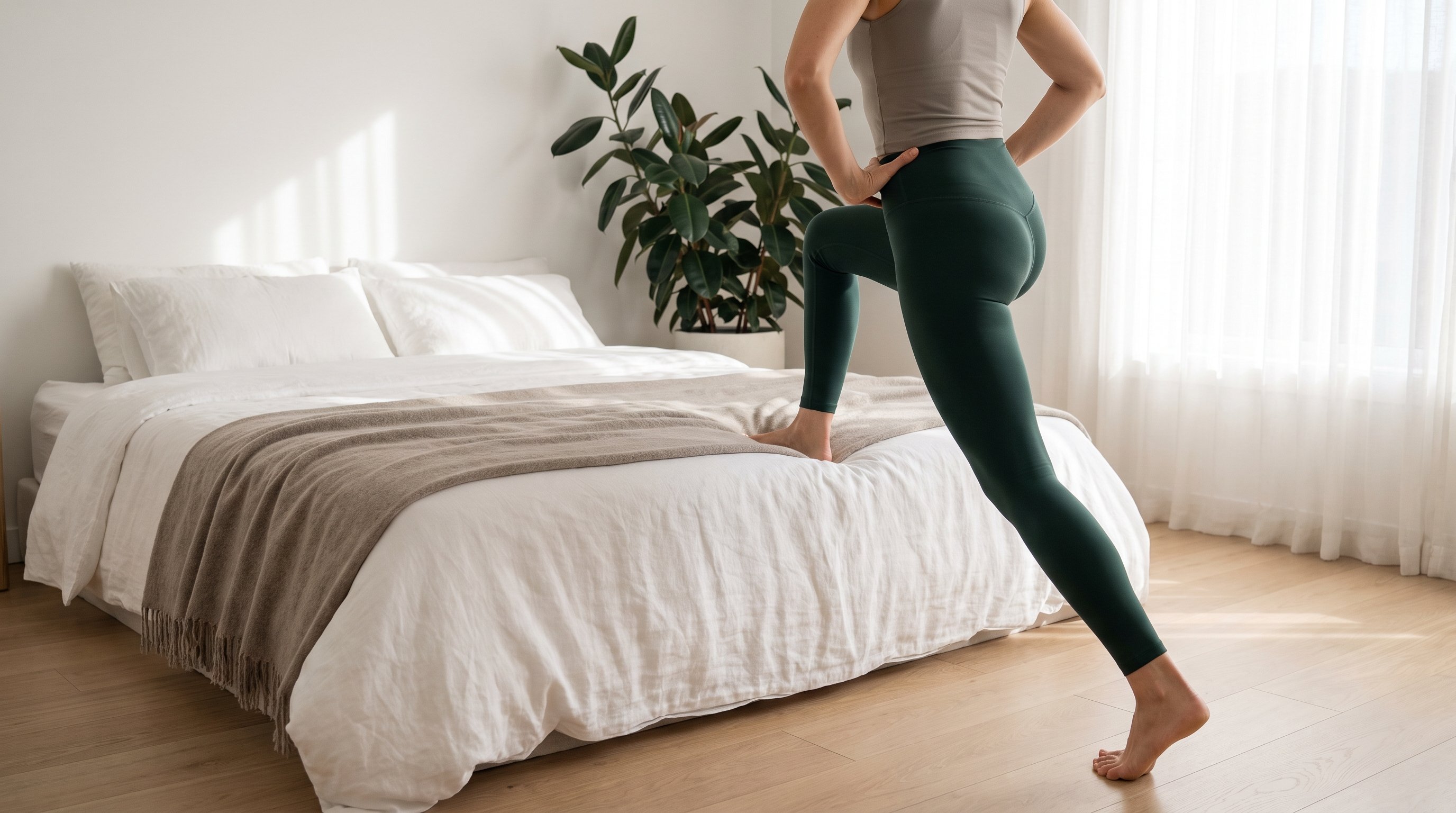
Most people drop off around week three or four, usually because the plan was more ambitious than the week allowed - which is exactly why starting smaller than feels necessary tends to work better long term.
Backing a Beginner Home Workout With Peptide Diet
A workout plan works harder when the rest of the day supports it, rather than fighting against it.
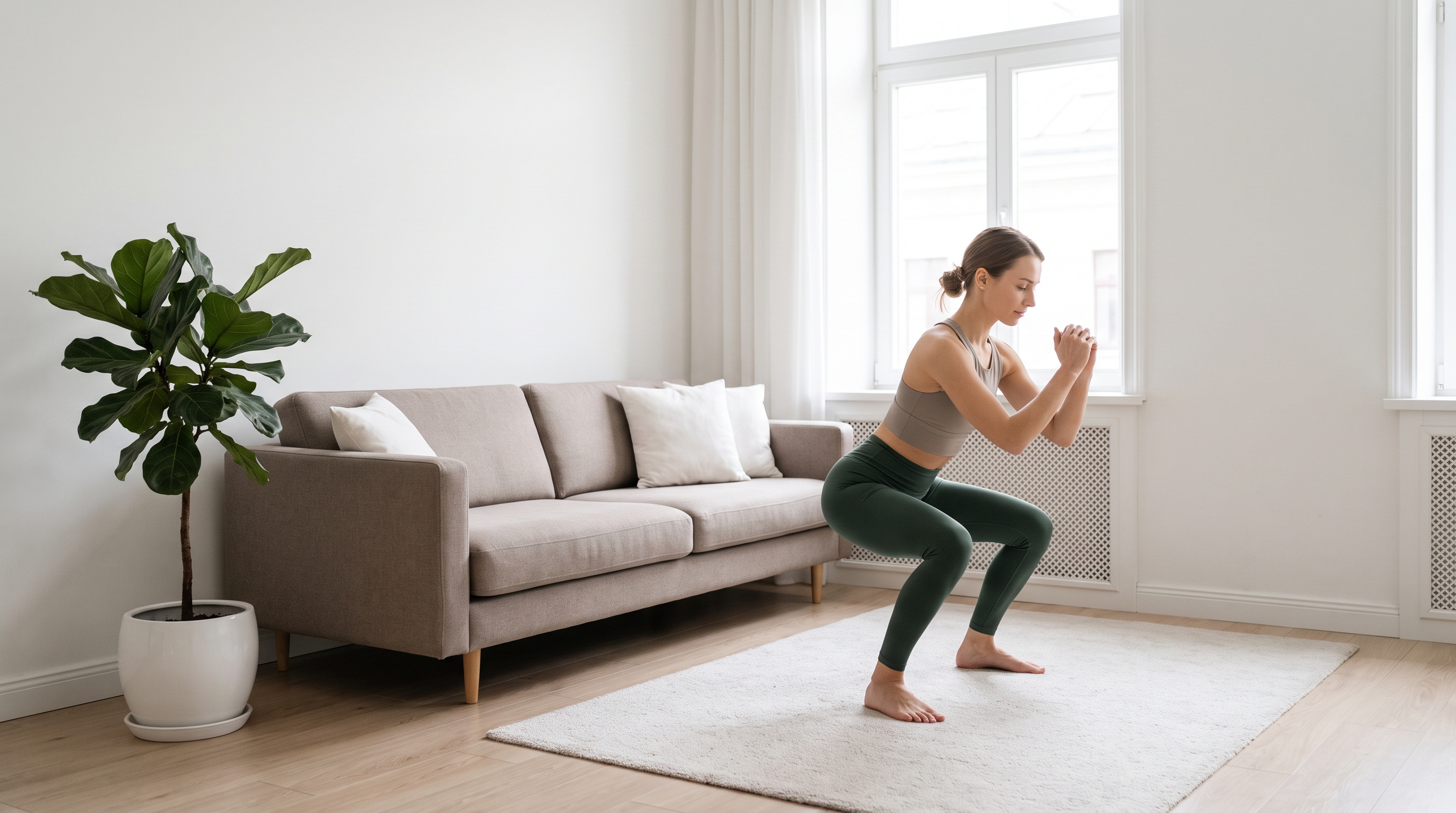
Peptide Diet pairs its 100+ low-impact workouts and exercises with meal plans built around food you already like, plus progress tracking for steps, water and weight so you can see the whole picture instead of guessing.
Maximize Your Peptide Results
Eat Right, Lose Weight Faster
Keeping a Home Workout Going Past the First Month
Pick three days this week, write them down somewhere you'll actually see them, and treat the first session as the only goal - not the whole month.
Peptide Diet can sit alongside that plan, giving you short workouts and a tracker so the habit has something to hold onto beyond willpower alone.
FAQ
For building a consistent habit and working major muscle groups, bodyweight training at home covers a lot of ground. It won't replace heavy barbell lifting, but for most beginners that's not the goal anyway.
No - a sturdy chair or wall and some floor space is enough for most beginner routines. Equipment can be added later if you want more variety.
Most bodyweight moves need less than two square metres, so a corner of a bedroom or living room works fine. Peptide Diet's workout library includes shorter routines designed for exactly this kind of limited space.
Starting with too many sessions or too much intensity is the most common reason. Scaling back to a shorter, simpler routine you can actually repeat tends to keep people going longer.
Share this post