How To Track Calories Without It Taking Over Your Day
By:Author:Peptide Diet Editorial
Updated on:October 18, 2026

- What a Normal Day of Tracking Looks Like
- How Often You Actually Need to Log Food
- Rough Logging Beats Perfect Logging Every Time
- Fitting Calorie Tracking Into a Normal Week
- Who Calorie Tracking Suits and How to Adjust It
- When Calorie Tracking Starts to Feel Automatic
- Making Calorie Tracking Easier With Peptide Diet
- Keeping a Calorie Log You Will Actually Use
Tracking calories means writing down what you eat and roughly how much, so you can see your intake against what your body actually needs. It works because most people underestimate how much they eat by a fair margin, and a log closes that gap.
The mechanism is simple: weight change follows calories in versus calories out over time. Tracking does not change that equation, it just makes it visible, so the guesswork disappears.
This guide covers what a normal tracking day looks like, how often you actually need to log, why rough tracking beats perfect tracking, and how to keep it going once the novelty wears off.
What a Normal Day of Tracking Looks Like
A workable tracking day is short on effort and long on consistency. Here is one version a reader could copy tomorrow.
A Simple Tracking Day
- Breakfast - log it as you eat, using a rounded estimate rather than a weighed measurement
- Lunch - same approach, pick the closest match in your tracking app instead of hunting for an exact brand
- Snacks - log them the moment you eat them, before you forget
- Dinner - log it before you eat if you can, so you can adjust portions if the day is running high
- End of day - a 30-second glance at the total, no further action needed unless something feels off
Notice there is no weighing scale, no spreadsheet and no late-night recalculation. The goal is a log that takes minutes, not a project that takes hours.
How Often You Actually Need to Log Food
Frequency Matters More Than Precision
Logging daily, even loosely, teaches you more about your habits than logging perfectly once a week. A rough daily log beats an exact weekly one because patterns only show up when the data is continuous.
| Approach | Effort Required | Accuracy Over Time |
|---|---|---|
| Log every meal daily | Low per entry | High over time |
| Log most days, skip weekends | Low | Moderate |
| Weigh everything precisely | High | Very high |
| Log once a week from memory | Low total | Low |
| Log nothing, estimate mentally | None | Very low |
Daily, rough logging sits in the sweet spot. It asks little of you each time but adds up to a clear picture within a few weeks.
Rough Logging Beats Perfect Logging Every Time
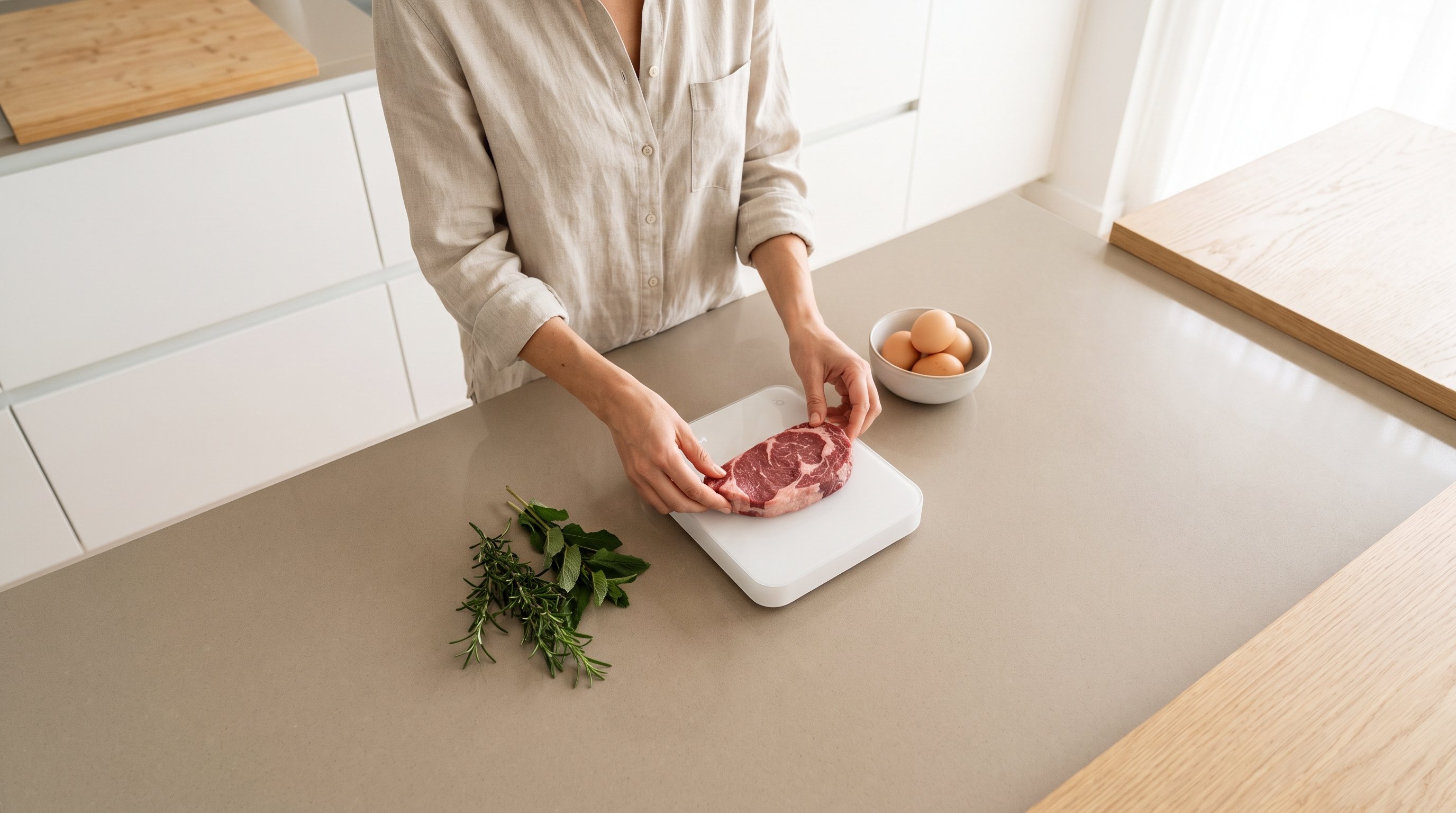
The harder route is weighing every ingredient, scanning every barcode and logging to the gram. It is more accurate on paper, but it is also the version most people abandon within a few weeks because it asks too much of a normal day.
The easier route is estimating portions by eye, using the closest match in a food database, and accepting that some days will be slightly off. That small loss of precision is a fair trade for a habit you actually keep doing.
A log you keep for months beats a perfect log you keep for ten days. Consistency, not precision, is what lets the numbers tell you anything useful.
Fitting Calorie Tracking Into a Normal Week
The real test of any tracking method is whether it survives a busy Tuesday, a takeaway night and a weekend away. If it only works on calm, organised days, it was never going to last.
This is where having a meal plan built around food you already like removes most of the friction, because you are not guessing portion sizes or hunting for obscure entries every time you eat.
Peptide Diet pairs customized meal plans with a progress tracker that keeps weight, water intake and daily habits in one place, so logging food is one small part of a routine rather than a separate chore bolted onto your day.
Who Calorie Tracking Suits and How to Adjust It
If You Are Just Starting Out
Start with rough estimates and a short list of foods you eat often. Precision can wait, the habit of logging every day cannot.
If You Are Short on Time
Pick a handful of go-to meals and log them as templates instead of building each one from scratch. This cuts the daily effort down to seconds without losing the overall picture.

If You Are Older or New to Apps
A simple paper log or a basic app with large buttons works just as well as anything complicated. The method matters less than whether you will actually open it each day.
If You Have Tried and Quit Before
Drop the idea that tracking has to be exact. Loosen the standard, log what you remember, and treat gaps as normal rather than a reason to stop.
When Calorie Tracking Starts to Feel Automatic
Most people find the first week or two the most effortful, simply because it is new. The habit tends to feel lighter once logging becomes something you do without thinking about it, rather than a task you have to remember.
This is also where people quit, usually after a busy week throws the routine off and they decide to start again later rather than just picking the log back up. The honest advice is to expect the occasional missed day and keep going anyway, since one gap does not undo the pattern you have been building.
There is no fixed point where tracking becomes unnecessary. Some people keep a light version of it going indefinitely because it helps them stay aware, not because they are chasing a number.
Making Calorie Tracking Easier With Peptide Diet
Tracking is easier to sustain when the food on your plate already fits the plan, instead of needing to be reverse-engineered after the fact.
Peptide Diet builds that structure in from the start, with meal plans drawn from over 1000 recipes, so the food you log is food you actually chose to eat, not a last-minute substitution. The progress tracker then holds your weight, water and step data alongside your meals, which means you are not switching between three different apps just to see the full picture.
Maximize Your Peptide Results
Eat Right, Lose Weight Faster
Keeping a Calorie Log You Will Actually Use
Pick one meal today and log it before you eat it, using a rough estimate rather than waiting until you have the exact numbers. That single entry is the whole starting point, everything else builds from doing it again tomorrow.
Peptide Diet can take some of the guesswork out of what to log by giving you a meal plan and tracker that already work together, so the habit has less friction from day one.
FAQ
It helps because it makes your actual intake visible instead of estimated, which is usually where the gap between effort and results comes from. It does not create the deficit on its own, it just shows you where you stand so you can adjust.
It does not have to be, especially if you log loosely and skip the gram-level precision. The point is awareness, not control over every bite, and plenty of people keep it light rather than strict.
Estimate as best you can using the closest match in your tracking app, and move on without trying to fix it retroactively. One imprecise day does not undo weeks of consistent logging.
Most people quit because they chased precision instead of consistency, which turns a quick daily habit into a chore. Peptide Diet pairs a meal plan with a built-in tracker so logging stays part of a normal routine rather than an extra task you eventually drop.
Share this post